In an article titled "In 5 to 10 years' time, computers might catch up with traditional technologies. Might." in David Mellor's Recording-Producer.com website, Mellor described giving up on his iPad because after trying the device for a collection of tasks and discovering it was a poor tool for reading, writing, and anything else he had hoped it would be good at. His realization from that was, "Perhaps the iPad isn't actually all that cutting edge. Perhaps even fully-fledged computers are not as cutting edge as we seem to think they are."
He goes on to a variety of comparisons of musical devices and applications that might not be as wonderful in their computer form as many have claimed. The main gist of the article was a comparison of the visual resolution of a magazine (SOS, in this case) and what it takes to get to that resolution on a computer screen. He pisses off a few readers and they replied with comments like "But try also making music with that magazine. That iPad has some very interesting apps for making music in novel ways. That magazine is limited to one function, albeit it does that one thing very good."
I thought about this for a bit and realized that I've been making this same argument for decades. So, my reply was:
I'm always entertained by the claim that users are "making music" on their iPads. If grouping stolen musical loops and repeating thumping and squeeking noises is "making music" and your standards for "music" are low enough that factory sounds fit the bill, I guess the claim has some weight. At best, this noise is as musical as the stuff that comes out of grade school music classes. Until I see someone actually play an iPad like a musical instrument with some skill and creativity beyond that required to play Guitar Hero, I'm reserving my definition of "musical instrument' to actual instruments, of which synthesizers barely qualify because of their user-hostile interfaces beyond the piano keyboard.
This is a concept with which I've had some sympathy for decades. We're hard pressed to find examples of better-made records from the digital era than from the multi-track tape years. It's not that hard to find examples of music with equal or greater emotional impact from the direct-to-disk or mono era. Digital tools are not ergonomic, on the average. They are in their infancy and may remain there forever because technology keeps marching-on from one gimmicky menu or knob-and-button format to the next without consideration of musician convenience or play-ability. As humans, we might not survive long enough to see computers as successful musical instruments. It took centuries for what we currently recognize as musical instruments to mature.
Not that long ago, I attended a seminar where an expert from Ableton Live! demonstrated the "music-making" capability of that program. I was incredibly unimpressed. The technology demonstrated wasn't the unimpressive part of the demo, the music was. "Fucking mindlessly boring" would be a compliment to the silly noises the demonstrator produced. There is a crowd of folks who imagine "dj music" is actual music, but they have grown up on repetitive video game noise and their tastes are childish, at best. These things are toys, not musical instruments, and the music reflects that lack of seriousness. The big difference between a Linus Peanuts piano or a Mickey Mouse wind-up guitar and an iPad is the price tag. The musical value is about the same. So, this isn't a generational complaint, it's more of a response to the effective marketing these toys have received.
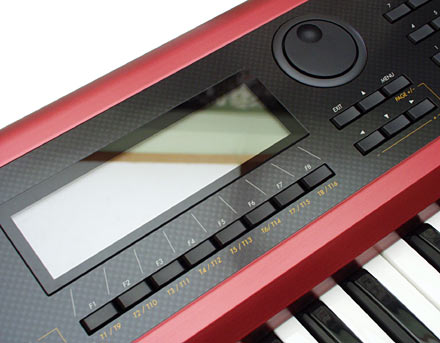
After decades of waiting for synthesizers to become user-friendly and creativity enhancing, I've given up on the whole idea. The best we've seen from the hardware manufacturers has been cumbersome button-and-menu driven combinations that cater to "computer-users' and not to musicians. I have seen a half-dozen technically-inclined and musically capable kids (and one or three instructors) unsuccessfully fumbling over a synthesizer's menu and connector options, trying to figure out how to get the damn sustain petal to work properly. Imagine how tough it is to get an actual musical note if the pedal operation is that complicated.
Couple that hassle with the fact that hardly anyone has found a creative thing to do with a synth since Edgar Winter's "Frankenstein" or ELP's "Lucky Man" and I'm pretty convinced that I won't live to see a computer musical interface that is well thought-out. The engineering motivations are all wrong. Consumers want the next thing, not a thing that works well.
Showing posts with label ableton live. Show all posts
Monday, May 21, 2012
Thursday, February 9, 2012
Gotta Have It
Tonight, the local AES chapter presented Ableton certified trainer Thomas Faulds and Ableton Live 8. Like the fool that I am, I volunteered to be his foil to compare with other pieces of software (Pro Tools, Logic Pro, Sonar, Cubase, Audition, etc).
Honestly, I can't think of a reason in the world why I would use Ableton Live. If "beats" are your kind of music, it's a great tool. I can't help but feel the difference between a beat programmer and a kid playing Guitar Hero is too fine a distance for me to measure. It's fun, but it's not playing music. For that matter, it's only fun for a little while.
After the presentation, Mr. Faulds and I got into a discussion about what's happening in professional audio software. He argued that the newest version of Pro Tools (v10) represented a microscopic advance in technology. I suggested that the most significant improvements v10 offered might be ignored by the less-than-astute customer base the industry is creating. By the industry, I mean all of the schools teaching "audio engineering," the long list of drivel genres the Grammies and the Recording Academy recognizes, what's left of the music business, and the largely deaf generation of kids who grew up with 125dBSPL of deafening earbud noise glued to their heads. 65-bit buses and 32-bit internal audio handling is pretty pointless to a 128kbs MPG customer base. We agreed to disagree.
I mentioned that there was a vanishing reason to "upgrade" to the latest version of any software because of the minimal advantages or tools to be gained for the substantial investment required. Faulds disagreed, saying that Apple will force the upgrade issue, regardless of utility or need. When I questioned how they would manage that, he said "If you don't upgrade, you won't be able to keep up with plugins and OS changes."
"That's the point. If what I have now does the job, I don't need new tools. Nothing Lion, for example, does improves on what I can do with my Mac and Snow Leopard. Pro Tools 10 currently includes machines that run 10.6.8, but the first "fix" from Avid might blow off older generation Macs that won't run 10.7. With that threat in mind, I don't feel the need to leave PT9."
Faulds continued to argue that I'd, eventually, have to upgrade to stay "current," but I ended that circular line of debate by saying, "That's true for these kids, but I'm 64. I won't live long enough to worry about any other generations of software."
There is more to it than that, though. People did perfectly professional work on Sound Tools, the first 4-track version of Pro Tools, and the first serious multi-track version of Pro Tools (2.0) that produced the first Grammy winner for Digi. Marketing squirrels can yak about why we "need" whatever crap they're pedaling, but the fact is we don't. We've had all the tools we need to record good audio, digitally, for at least a decade. The latest, greatest thing is a microscopic improvement on the original thing and having that tool won't make great music. Unfortunately, Faulds demonstrated some of that concept by showing all of the cool things Ableton Live can do without producing thirty seconds of interesting music in a two hour presentation.
The "leap" Ableton and similar software made between MIDI sequencing and loop programming is less about music and more about allowing people to play at music without having to learn how to play music. I can't help but think that is more of a sad development than a great programming achievement. The leap made by current DAW generations is almost raising the digital bar to the last generation of analog gear. Convenience is what allowed digital recording to obsolete analog and convenience is being overrun by constant "upgrades" to software, operating systems, and interfaces.
The fact is, many people are doing excellent work on Mac G3's and 4's, using all sorts of "obsolete" software and hardware. Another fact is, in spite of Apple's constant rearranging of the deck chairs on their computer Titanic, you can always find an old G3 or G4 in great condition for less than $125. You can find G5's for about that kind of money, too. Even the early Intel Macs are barely worth $250 loaded with memory, video cards, and, even, outdated Digi interfaces don't raise the price tag much. The chances are that someone committed to staying with an old version of everything can keep doing work well into the middle of the next decade; just by looting working parts of dirt cheap "obsolete" machines. If the work is the thing, this is obviously a smarter move than spending $4-6k on a new super-fast machine and pouring another pile of money in the latest-greatest software.Windows users have even less motivation to "upgrade." WinXP works, is faster than Win7, and is still supported by everyone.
At some point, living to install software and working overtime to pay for gear should make a real musical person question the point in the whole exercise. Sooner or later, you're going to have to make some music or move into IT where nobody ever does real work but they convince themselves they are running the world.
Honestly, I can't think of a reason in the world why I would use Ableton Live. If "beats" are your kind of music, it's a great tool. I can't help but feel the difference between a beat programmer and a kid playing Guitar Hero is too fine a distance for me to measure. It's fun, but it's not playing music. For that matter, it's only fun for a little while.
After the presentation, Mr. Faulds and I got into a discussion about what's happening in professional audio software. He argued that the newest version of Pro Tools (v10) represented a microscopic advance in technology. I suggested that the most significant improvements v10 offered might be ignored by the less-than-astute customer base the industry is creating. By the industry, I mean all of the schools teaching "audio engineering," the long list of drivel genres the Grammies and the Recording Academy recognizes, what's left of the music business, and the largely deaf generation of kids who grew up with 125dBSPL of deafening earbud noise glued to their heads. 65-bit buses and 32-bit internal audio handling is pretty pointless to a 128kbs MPG customer base. We agreed to disagree.
I mentioned that there was a vanishing reason to "upgrade" to the latest version of any software because of the minimal advantages or tools to be gained for the substantial investment required. Faulds disagreed, saying that Apple will force the upgrade issue, regardless of utility or need. When I questioned how they would manage that, he said "If you don't upgrade, you won't be able to keep up with plugins and OS changes."
"That's the point. If what I have now does the job, I don't need new tools. Nothing Lion, for example, does improves on what I can do with my Mac and Snow Leopard. Pro Tools 10 currently includes machines that run 10.6.8, but the first "fix" from Avid might blow off older generation Macs that won't run 10.7. With that threat in mind, I don't feel the need to leave PT9."
Faulds continued to argue that I'd, eventually, have to upgrade to stay "current," but I ended that circular line of debate by saying, "That's true for these kids, but I'm 64. I won't live long enough to worry about any other generations of software."
There is more to it than that, though. People did perfectly professional work on Sound Tools, the first 4-track version of Pro Tools, and the first serious multi-track version of Pro Tools (2.0) that produced the first Grammy winner for Digi. Marketing squirrels can yak about why we "need" whatever crap they're pedaling, but the fact is we don't. We've had all the tools we need to record good audio, digitally, for at least a decade. The latest, greatest thing is a microscopic improvement on the original thing and having that tool won't make great music. Unfortunately, Faulds demonstrated some of that concept by showing all of the cool things Ableton Live can do without producing thirty seconds of interesting music in a two hour presentation.
The "leap" Ableton and similar software made between MIDI sequencing and loop programming is less about music and more about allowing people to play at music without having to learn how to play music. I can't help but think that is more of a sad development than a great programming achievement. The leap made by current DAW generations is almost raising the digital bar to the last generation of analog gear. Convenience is what allowed digital recording to obsolete analog and convenience is being overrun by constant "upgrades" to software, operating systems, and interfaces.
The fact is, many people are doing excellent work on Mac G3's and 4's, using all sorts of "obsolete" software and hardware. Another fact is, in spite of Apple's constant rearranging of the deck chairs on their computer Titanic, you can always find an old G3 or G4 in great condition for less than $125. You can find G5's for about that kind of money, too. Even the early Intel Macs are barely worth $250 loaded with memory, video cards, and, even, outdated Digi interfaces don't raise the price tag much. The chances are that someone committed to staying with an old version of everything can keep doing work well into the middle of the next decade; just by looting working parts of dirt cheap "obsolete" machines. If the work is the thing, this is obviously a smarter move than spending $4-6k on a new super-fast machine and pouring another pile of money in the latest-greatest software.Windows users have even less motivation to "upgrade." WinXP works, is faster than Win7, and is still supported by everyone.
At some point, living to install software and working overtime to pay for gear should make a real musical person question the point in the whole exercise. Sooner or later, you're going to have to make some music or move into IT where nobody ever does real work but they convince themselves they are running the world.
Subscribe to:
Posts (Atom)
Wirebender Audio Rants
Over the dozen years I taught audio engineering at Musictech College and McNally Smith College of Music, I accumulated a lot of material that might be useful to all sorts of budding audio techs and musicians. This site will include comments and questions about professional audio standards, practices, and equipment. I will add occasional product reviews with as many objective and irrational opinions as possible.