Google is threatening to discontinue updates on Chrome for my Apple OS X, 10.7 or whatever cutsey animal name Apple gave it, and my wife’s exercise room WinXP machine. No problem, I deleted Chrome from both machines and they are happy with Explorer and/or Firefox. I don’t care which browser I’m using as long as it works and I can’t say that Chrome works all that well on a regular basis.
Threats to abandon my computer platform have been entertainment since I began to think about retiring in 2012. We have a WinXP machine in the basement that my wife uses for watching Netflix and Amazon movies and while Microsquash abandoned “extended support” for WinXP on April 8, 2014, that system keeps providing entertainment. The computer is probably 15 years old as is WinXP. The end of Microsoft’s “support” and security updates is only noticable because I can’t shut off the damn wanting that my system is not set to automatically accept updates. I’m not alone in continuing to get along with this obsolete software. As of January 2016, the US Windows XP desktop market share is 8%, China at 26%,and it is still the fifth most popular OS in the world after Windows 8.1 and OS X. Some statistics rank WinXP as second after Windows 7. Support from either Microsoft or Apple belongs in quotes because their definition of that word is only consistent with what other industries might call “customer abuse.”
Almost 50 years ago a friend and I managed to squirrel our way on to the lineup of local performers who played the stage at the Dallas folk music club, The Rubaiyat. Until a few years ago, I could remember the name of the “group” we played as. “Jug Band” was in the name somewhere and some word like “undefined” or “random” was also in the name because there were several of us who played together but you never knew how many there would be outside of the two of us, Ed and I, who were the core. It might be a duet or it might be a 17-piece collection of assorted “percussionists” banging on everything from bongos to forks and spoons with banjos, a stand-up bass, and assorted guitars tossed in for volume and texture. Our high point was intro’ing one of the period’s famous “Toms” or “Tims”: Tom Paxton, Tim Buckley, Tom Rush, Tom Glazer, Tim Morgan, etc. You’d think I’d remember, but I was mostly into soul music at the time and playing on stage, with nothing between me and what felt like a hostile world but an acoustic guitar, scared the shit out of me. Usually, when I left the stage I just kept going until I was out the door and sucking in large quantities of fresh urban Texas air until I could relax a little. All I remember about the headline is when we walked past him on the way off of the “stage,” he said, “You guys know what it’s supposed to sound like.” I have never known if that was a compliment or a mild cut our outright sarcasm.
I’m sure I don’t accurately remember how many people could cram into the Rubaiyat, but it was more than a handful and likely close to 50 or 75. Some people called the place a “coffee shop,” but I don’t remember coffee at all. I didn’t drink the stuff until I was in my 40’s and, like golf and Harley Davidsons, I considered coffee to be something “old people” did. I think you could buy beer at the club, but I didn’t drink beer back then, either.
What I do remember about the Rubaiyat was that we didn’t mess with microphones or a speaker system in the club. You just sat down in front of the room and played. People were quiet if they liked and not as quiet if you bored them. It wasn’t a hostile room to play, but it wasn’t mindlessly supportive, either.
Here are some rules I’d apply to when you need a sound system:
· Your facility holds more than 100 people and you serve food. If the food/bar service can’t be quiet enough to allow the audience to hear the music, you have justification for a small, high fidelity sound system.
Many of the artists in your venue bring pre-recorded accompaniment to enhance their performance: rap, spoken word, etc. You don’t need big power, since you are still a small venue, but you will need to be able to accomodate 1/8”/3.5mm TRS, 1/4” TRS, XLR, and even phono connectors to get their gear into yours. Again, you are a small venue and you don’t need to pulverize your victims’ hearing. Getting the background up to the acoustic output of the voice is enough. Almost any stereo system can pull this off.
You venue holds 100+ customers and many of them will be dancing.
Outside of those three categories, your need for a sound system is purely psychological. If Tim/Tom didn’t need reinforcement at the Rubaiyat, you don’t either. I know our jug band didn’t need or deserve any additional volume and we were probably better than you or your group. After all, we intro’d Tim/Tom somebody semi-famous in a now-legendary coffee house back in the days when men were men, music stars played tiny clubs for $100, and small furry animals from Alpha Centuri were small furry animals from Alpha Centuri.
There is a thing that happens when someone famous dies where all of the weirdness, bad behavior, and even criminal behavior vanishes from the discussion and we all pretend to feel bad that famous character died. Even weirder, people who disliked, hated, or even wanted to imprison or hang the famous dude now sing his praises. When” Nixon died, probably the most hated man in the United States during the second half of the 20th Century, people who once would have shot the man down on sight praised his “leadership.” When Prince died, the world of “crazy Prince” stories turned into “super humanitarian who was the nicest guy you ever met” stories. Weirder, people I know who had told me tons of the crazy Prince stories practically rewrote their own personal history to make him saintly. I suspect this is something I should have learned as a child, but the only traditions my parents tried to pass on to me were religious and none of that took. Thanks to that flaw in my upbringing, I tend to see people the same after they die as before.
One of the first crazy Prince stories I ever heard came from a live sound guy who was working in marketing with Midas (when Midas belonged to Bosch Communications Systems in Minnesota). Many of the Bosch folks were in some way connected to Prince’s Minnesota facilities or his touring history. This guy was Prince’s tour manger for few years and was pretty close to the purple guy for a while.
During one of Prince’s European tours, he became infatuated with Holland’s windmills and bought one to be delivered and setup at his Chanhassen home. That happened and for a few moments he was happy with his new purchase. Sometime after the installation, Prince called his tour manager and bitched, “It’s pointing the wrong way.”
“It points the way the wind blows, Prince.” Was the only logical reply.
“We’ll see about that,” said Prince. A few days later, he had the windmill torn down and discarded.
My first personal moment with Prince was the night a friend had invited me to the grand opening of the club where he worked in Minneapolis. He had designed the new sound system for the club and I had consulted with him on some of the technical aspects. Along with getting paid, I got tickets for the grand opening and invited couple of friends along with my wife. The club had a balcony and we picked out a table in the middle next to the parapet. It was a nice location, but we were the only people in the balcony so there were a lot of tables available with equally good views of the stage.
We ordered drinks and appetizers and were engage in the usual pre-rock show converstions when a guy the size of a buss showed up and said “Prince wants to sit here.”
I said, “There’s lots of room up here, why our table?”
“Prince wants to sit here.”
I was about to blow him off when my friend appeared and explained that Prince wanted the entire balcony to himself and that we’d have to move. By then, the main floor was over-crowded because the usual morons who chase around Minneapolis following Prince had shown up. So, there was no place for us to sit that would give us much of the new sound system experience or any kind of sight line to the stage. We left.
It was several years later before I saw my friend again and he was still embarrassed about the Prince debacle. He was equally baffled that I didn’t know Prince was a big deal in Minneapolis (or anywhere).
For years, a couple of my geek friends did most of the studio maintenance for Paisley Park. Prince would go through phases where he would sour on his techs (mostly when they insisted on getting paid) and his studio manager would shop for a new tech.
During one of those moments, I took the call to service the studio’s SSL patchbay problems. I had to do a little parts chasing and one of the studio employees showed me a room full of “condemned” equipment where I could salvage a couple of connectors for my repair job. When I asked why all of that stuff was crammed into the room, he told me that when a piece of equipment baffled or irritated Prince, he had it banished to this room. I said something about that being “pretty idiotic” and went on with my work. While I was there, I ended up doing a couple of other small repairs and between the travel time and work the bill ended up being about twice the retainer I’d insisted on (because I knew that Paisley often didn’t pay its bills). Of course, Paisley Park still owes me about $500 for that repair visit. In the Kevin Smith video at the top of this essay, Kevin mentions that Prince had every room in the facility mic’d and after hearing that I’ve wondered if my slight cost me getting the invoice paid?
Over the next decade or so, I’d get a call or an email from the Paisley studio manager of the moment asking if I could stand-in for the regular tech until Prince got over whatever mood he was in at the moment. I’d remind them that Paisley still owed me money and they’d go away. The last time Paisley rattled my cage was a few months after I retired and had sold almost all of my test equipment. Again, Prince was pissed at his regular tech and nobody else would take a chance on getting paid for doing the work. The email said, “Are you really retired or would you come look at our SSL?”
I wrote back, “I’m retired and you still owe me money. So, yes and no.”
To double-check my retired status, the studio manager called some of my friends from the music school where I worked and asked them to use their influence to get me to do the Paisley job. The only one who gave it any sort of shot emailed me and asked, “Still retired.”
I wrote him, “Yep.”
He replied, “Thought so.”
A couple of months later, we were having a beer and he filled me in on why that conversation had taken place.
It was pretty well known that nobody was ever supposed to “look at” Prince or talk to him. I never had the opportunity to break that rule, but I probably would have just to see the reaction.
One of the moments that many people use to justify their reverence for Prince was his solo at the R&R Hall of Fame (“the greatest solo ever”). For sure, that was a pretty good performance. It wasn’t even in the top ten rock solos from my personal experience, but he certainly acted like he thought he was showing up the stage. The bit where he tosses his guitar into a roadie’s hands and struts off like he “showed ‘em” pretty much confirmed all of my biases about Prince. It just looked like an act of disrespect to me.
The other credential his fans give for his Princelyness was when Clapton was asked what it felt like to be the greatest guitarist in the world and he replied, “I don’t know. Why don’t you ask Prince?”
There are a couple of ways to take that and my take would be that Clapton was saying the only guy arrogant enough to believe he was the greatest guitarist in the world would be Prince.
I ended up with this device as my primary recording interface purely by accident. For several years, I used a combination of a MOTU 828 MKII and a Focusrite OctoPre MKII as my 18 channel location recording rig. While that mostly worked, MOTU’s software/driver was regularly glitchy and it became one of the many reasons I rarely “updated” my Mac’s software. When I retired and downsized my possessions and hobbies, the mobile rig went pretty early in the garage sale.
I had a couple cheap two channel USB interfaces and sort of assumed that would more than do the job for whatever I’d be doing in the future. A friend, Scott Jarrett, bought an UltraLite when it first came out and suffered with it for a few months before he decided it was unusable. When I came upon a great deal on my MK3 version, I figured I’d buy it, play with it until it pissed me off, and sell it for a profit. Four years later, I still have it. While MOTU has a talent for making interfaces overly complicated, the MK3 mostly works as expected.
MOTU Specs the unit with:
Feature summary
Hybrid FireWire/USB2 connectivity — connect to your computer via either bus-powered FireWire or hi-speed USB2.
10 inputs / 14 outputs — there's no channel sharing in the UltraLite-mk3 Hybrid; the mic inputs, S/PDIF I/O, headphone out and main outs are all handled as separate channels.
Classic Reverb™ — provides five different room types, three frequency shelves with adjustable crossover points, shelf filtering and reverb lengths up to 60 seconds.
Two forms of compression — a standard compressor with conventional threshold/ratio/attack/release/gain controls and the Leveler™, an accurate model of the legendary LA-2A optical compressor, which provides vintage, musical automatic gain control.
Modeled EQ — provides 7-band parametric EQ modeled after British analog console EQs, featuring 4 filter styles (gain/Q profiles) to effectively cover a wide range of audio material. LP and HP filters are also supplied with slopes that range from 6 to 36 dB.
Front-panel control — access any setting in your entire UltraLite-mk3 Hybrid mix directly from the front panel.
"Reverb return" stream — allows users to record or mix UltraLite-mk3 Hybrid reverb output separately in their DAW. Effects can also be applied when the UltraLite-mk3 Hybrid is operating stand-alone (without a computer) as a complete stand-alone mixer.
Stand-alone operation — program your mixes at the studio and then bring the UltraLite-mk3 Hybrid to your gig — no computer needed. Just plug in the included power adapter and you are ready to go. Need to tweak the mix? Do it on site using the back-lit LCD and front-panel controls.
Multiple CueMix FX mixes — for example, create different monitor mixes for the main outs and headphones. Or add send/return loops for outboard gear — with no latency.
Two combo jacks provide hi-Z 1/4” guitar input or low-Z XLR mic input with phantom power, pad and plenty of gain.
Eight 24-bit 192kHz analog inputs and outputs on balanced/unbalanced 1/4" TRS jacks
Precision Digital Trim™ — Digitally controlled analog trim on all analog inputs (mic/guitar inputs + quarter-inch TRS inputs) provides accurate adjustements in 1 dB increments. Fine-tune the balance of your analog inputs and then save/recall trim configurations.
Direct Digital Synthesis™ (DDS) — a DSP-driven phase lock engine and internal clock source that produces imperceptibly low jitter characteristics (below the noise floor), even when the UltraLite-mk3 Hybrid is resolved to an external clock source via SMPTE time code.
Time code support — directly resolves to (or generates) time code via any quarter-inch input or output, without the need for an extra synchronizer.
Sample-accurate MIDI — connect a MIDI controller and/or sound module with no separate interface needed. MIDI I/O is sample-accurate with supporting software.
Expandable — add additional interfaces for more I/O as your needs grow.
Separate TRS main outs with front panel volume control.
Stereo 24-bit 96kHz S/PDIF in/out.
DC-coupled TRS outputs — can be used with Volta™ (sold separately) to manipulate and sequence voltage-controlled modular synthesizers from a host DAW.
Includes native 32- and 64-bit drivers for Mac OS X and Windows 10/8/7/Vista/XP, including ASIO, WDM, Wave, Core Audio, and Core MIDI. Supports all popular Mac and Windows audio software.
Front panel volume control for monitoring. Stereo, Quad, 6.1, 7.1 and user-defined surround monitoring setups available.
Front panel headphone jack with volume control.
Bus-powered FireWire operation. No need for external power when operating as a FireWire interface connected to a computer. A power supply is included for stand-alone operation.
Chassis dimensions, excluding rack ears and front and back panel knobs and connectors: 9.5 × 7 × 1.75 inches (24.13 × 17.78 × 4.45 cm). Knobs and connectors extend up to 0.5 inch (1.27 cm) from front and back panels, adding 1 inch (2.54 cm) to depth. With rack ears attached, fits one half of a standard 19 inch (48.26 cm) rack at 1U high.
MOTU makes some other specs-claims that I’d have to dispute. The worst of which is “Plug-and-play operation with your Mac or PC via FireWire or USB2.” I’m pretty sure MOTU does not know what “plug-and-play” means. In using any MOTU product, you will have to wrestle with their obscure and user-hostile drivers and software. Like another company I despise, DiGiCo, you can not obtain MOTU drivers without logging into their website and registering a product. As opposed to actual plug-and-play products, absolutely nothing useful happens when you plug in a MOTU product without pre-installing drivers.
MOTU follows that delusion with “Includes AudioDesk full-featured sample-accurate workstation software for the Mac and Windows with recording, editing, mixing, real-time 32-bit effects processing & sample-accurate sync.” On both my Mac and Windows machines, AudioDesk 2 was a total loser, failing to even function on Windows 7 and it was such a glitch monster on my Mac that I deleted it immediately.
CueMix FX™, the MOTU proclaimed “flexible 10 input/14 bus mixer with on-board DSP effects, including reverb with sends/returns, plus EQ and compression on every input and output” is a pain in the ass. It has some useful features, like “full-screen real-time FFT display, spectrogram ‘waterfall’ display, oscilloscope, X-Y plot and linear or polar phase analysis,” but you will curse its existence often on the way to obtaining any of those features. CueMix is not really a feature, but an obstacle you just have to learn to live with if you use MOTU products.
Getting Pro Tools or Logic to “see” the features of CueMix is a trick. Once I found a setup that worked, I saved it and haven’t experimented much with it since.
Considering how powerful and flexible the UltraLite is, the fact that it can be powered with a Firewire A port (400Mb/s) is a nice thing. Unfortunately, unless you’re sporting a historic Mac/PC (like me), that won’t do you much good. The IEEE 1394 a spec allowed for about 5W of power on the 6-wire buss and 25-30VDC unregulated. USB2 has plenty of power, but the voltage is too low for most applications including the UltraLite.
The two mic pres are reasonably quiet and provide the usual 60dB of gain. The input connectors are XLR/TRS for balanced or unbalanced operation of microphones or instruments. Gain is 1dB/step continuously-variable analog/digital front-panel controls. The knobs are small and a little hard to find in low lighting. The knobs are also the push-button switches for selecting 48VDC phantom power and a 15dB pad. All 8 of the analog inputs, including the two mic pres, can be controlled remotely through my old CueMix buddy. That is, actually, a nice feature especially during a remote recording session.
Mostly, I’m pretty happy with my MOTU unit. Especially for the insane price I lucked into.
The school’s administration, apparently, didn’t get along all that well with the Motion City guys. The marketing contact more or less said, “they’re a bunch of assholes” after she’d dumped them in the student lounge that doubled as our artist dressing room. A couple other admin types made similar comments during our setup.
A couple of hours before showtime, I still didn’t know what the instrumentation will be or have a stage plot. The school’s live guy was more clueless than me. Information was doing the opposite of what is often called “flowing.” I lucked out, two of my students showed up for the setup; one for the duration and the other just for the setup before he had to go to work. While the kid who’d be there for the duration helped me run the snake and setup the recording equipment, I sent the other guy into to ask the band about their instrumentation. He was gone a really long time and I began to worry about him, based on the comments we’d heard from administration. When he finally made it back, he was drunk and had completely forgotten what I’d asked him to do. The band had generously shared their reception buffett, which was mostly beer. Summit Amber Ale, I think.
Not only was that kid pretty useless to me for the rest of the setup, but he was sort of screwed for work later that night. So, I sent in the next victim with instructions to stay the hell away from the beer supply. He came back pretty quickly with a stage plot and we got to work trying to optimize our 18 channels max on a five piece band with at least four vocals. We put up a minimal three-mic drum rig, DI’d the bass, keyboards, and mic’d the guitars and the bass amp. In the end, we had one open channel for a room mic. In the past, the audience mostly sat behind the FOH area in the cafe’s seating area. That was true, even for POS and Doomtree. So, it seemed like a fair bet that we’d get whatever audience participation there would be from that conservative location with a little isolation from the stage output.
The band came out for very brief sound check, looked at the setup and went with it. They had a couple of requests that required some grouping of the synth sounds to allow coverage for an additional stage amp. Otherwise, we were good to go and I, finally, took a breath, grabbed a bottle of water, and sat back to watch the crowd come in.
The crowd was unexpected. Most of the school’s students blew off the show, but Motion City’s fans were there in spades. In a few minutes, all of the seating was filled and a pretty decent sized group milled around the stage. The school president appeared and announced the band. Justin Pierre took the mic and said, “We’re not playing until you rush the stage.” Pretty much the whole crowd got up and packed the area between the FOH setup and the stage. No only could I barely see the stage, making getting levels sorted out for the usual changes in performance levels difficult, but it was pretty obvious that my audience-response mic was really positioned badly. A few minutes into the first song, it was also obvious that the audience really knew the band and their songs. So much so that Justin stopped singing often and let the audience fill in the spaces. And my one lonely, poorly-placed room mic barely snagged any of it.
In all, it was a great show and I became a big fan of Motion City Soundtrack, now owning four of their CDs. After the show Justin Pierre and Joshua Cain made a trip back to our area to thank us for doing the show. Good guys and good times.The video, below, was a mix from what we delivered to the Current's Local Show and it is absolutely representative of how great this band is.
A while back, I was arguing with one of my MNSCU instructors about why he needed to get over his fear of lead-free solder and move his instruction program into this century. During this “discussion,” mentioned that the electrical assembly portion of almost every electric guitar I’ve ever disassembled has been an embarrassment. From the major factories to the boutique builders, the soldering, component placement and security, and wiring have been . . . sad. Likewise, many of the guitars (and other audio products) I’ve repaired in my career have failed because of soldering defects. His response was, “Don’t you think one of my long term customers would have complained if my soldering failed?”
This isn’t the first time I’ve written about this discussion, but it keeps coming back to haunt me. There is an old 5/5/5 restaurant rule that says something like “It takes $5 in advertising to get a new customer to try a business, 5 seconds of poor service to drive them away, and $5,000 in advertising to get them back again.” It’s a fact. I may be the Geezer with A Grudge, but I’m not the only person on the planet with a long memory or who would rather just move along than wrestle with convincing a company that I’d experienced poor service or had an unsatisfactory experience with their products.
A couple of days after our discussion, I remembered my last relationship with a luthier, back in the late 1970’s in Lincoln, Nebraska. For almost a decade, I’d fallen into the habit of buying guitars and, if I planned on keeping the instrument for any time, I hauled it to Lincoln and had my luthier setup the guitar at $150-250 per instrument. That seems like a lot for the time, but I was buying guitars idiotically cheaply from stoners and starving artists and had the margin to spare with most of my purchases.
Sometime in the early 80’s I brought in an old Gibson Explorer that clearly needed fretwork and a trussrod adjustment. The luthier had a couple of new employees, but I assumed that since I was an old customer my instrument would be serviced by the owner. I was wrong and the setup was awful. I lived about 75 miles from Lincoln and, while my studio was in Lincoln and I was in town for 2-3 days every weekend, I bought a book and made the corrections to the setup myself. Not only did I not complain to the store owner, I never brought in another instrument again and when my own customers asked where I’d have guitar work done I sent them to a shop in Omaha. I didn’t really know the shop in Omaha all that well, but I felt like I knew the Lincoln shop too well.
So, again my answer is “no.” I do not think the average customer, long-term or not, will bother to complain about lousy service. They’ll just move on unless you have set up some really clever system to almost require them to let you know how they felt about your product or service.
In my dotage, I’m taking a “guitar repair and construction” course at my local community college; mostly for access to the school’s incredible wood shop tools. After a couple of semesters, I began to wonder why none of the classes ended with the usual student course/instructor evaluations. Since the dropout rate in my class has been extraordinary, you’d think someone might care about student retention. After a little inquiry into the school’s policies I received the following response from administration, “According to policies set forth by both the State of Minnesota and MnSCU the tenured faculty are only required to assess their class once per year - and they can do so in whatever format they choose. Probationary instructors need to assess much more frequently. I should mention that we are in full compliance with the policies, so I'm not sure what you're looking to do with this.”
All I can say to that response is "Wow!" No wonder my experience with MNSCU's programs (from the UofM to Inver Hills to Southeast Tech) has been so marginal. It sounds like a system totally driven by teacher union contracts and management disregard with no system for maintaining quality-of-program or delivery performance considerations. There is no such thing as a feedback-free system that provides any sort of quality control.
Now I really feel like I'm officially in the Midwest, the home of the most mediocre educational experiences I suffered in my 30+ years as a student. It does explain the proliferation of for-profit schools here, though. Apparently, the solution is for the student senate to recommend RateMyProfessors.com and give up on the school administration doing any sort of job.
One of the many things I learned working as an instructor at a music college was that talent, creativity, originality, stage presence, and “the right look” are not rare things. In my first couple of years at the school, I recorded original music from students and musicians from the Minneapolis/St. Paul community that blew me away. I recorded songs that I couldn’t believe the world didn’t want and need to hear. As my time there went on, that became such an expected and regular event that it was the background for my existence for 13 years. All the while, the stuff I heard on the radio and internet paled in comparison; or worse, often much worse.
Now that I’m retired and fooling around learning how to build and repair guitars it’s interesting to look back on my teaching and recording experience from the position of being in a classroom full of kids who are taking on a semi-practical trade while still hoping to be the “next big thing.” Most of these kids are pretty good musicians. Some of them are decent songwriters. The fact is that I’ve seen much, much better and all that talent went pretty much nowhere. Saying that, I don’t mean to discourage them. Their chance of making it big as a musician is almost exactly the same as it was for the music students who I thought had it all going for them: practically nill.
Luck and connections are more important than talent. It doesn’t hurt to have a few family members in the business, too. This is true for all areas of the arts. The world is full of amazing musicians, painters, sculptors, singers and dancers, funny people and dramatic actors, glass blowers, story tellers and poets, wood carvers and cabinetmakers, and people who make beautiful things and moments from nearly nothing. Some of those people make small or large fortunes from their “talent” and many of the most wealthy are nearly talentless (Yeah, I’m talking about you Kayne.) At the other end of the spectrum, there are incredibly talented people who, outside of friends and family, no one every hears about.
Like Mike Lewis told the 2012 Princeton graduation class talent only takes you so far. Luck is one hell of a lot more important a contributor to success and if you aren’t successful it could be because you weren’t lucky. If you were, it might not be due to anything about you.
I’m obviously vitamin-starved. At the last Fair Trade Book Store open mic, I blew off my usual mediocre acoustic guitar piece and brought my MacBook Pro to demonstrate a vintage musical piece to the small group of musicians and musical kids. My wife warned me to “keep it short,” so I wouldn’t bore anyone (meaning her). I did my best to make it brief, but mostly what I pointed out to myself was how much I miss having a few friends to talk about recording, recording technology, and music.
For a few years, working at Musictech (then McNally Smith College of Music) was a full emersion geek-out experience. Every day, I was close to instructors and students who not only loved music but who were fascinated with the physics, electronics, acoustics, and psycho-acoustics that is core to the production of modern music in any of its forms. The geek factor slowly vanished from the school as many of the tech-intensive instructors left and were replaced by people whose claim to fame was Pro Tools expertise. I guess there is a geekiness associated with being really good with function and quick-keys, but it’s not something I care much about. You can polish turds until they shine, but they are still just little bits of crap. Without some knowledge of how the physical equipment works (microphones, preamps and signal chain, acoustics, signal processing, and human hearing), knowing how to cut up performances into well-aligned bits just isn’t very interesting.
So I retired and moved from the Twin Cities to Red Wing, where we made new friends, found more things to do than we have time to do them, and picked up some new hobbies (like guitar building and cabinet-making). It turns out that I miss some of what I lost.
25 years ago, I quit my last full-time music industry job and found work in medical devices. Admittedly, too much of my motivation was money. Eventually, it turned into lots of money. While the money was good, one of the first things I noticed about the people I worked with was “this is not my culture.” While there were a few outdoor recreation types in Engineering, most everyone in medical devices and medicine was focused on making money, getting promotions, and acquiring stuff. I could easily go for months without hearing anyone hum atonally to themselves, let alone sing or play a musical instrument. I felt a little like a Stranger in A Strange Land. Or a lot.
I guess I have to do something about that. It turns out that not working with musicians and technical people is more of a deprivation than I expected. Go figure.
One of the things I looked forward to when I moved to California was getting to hear the Crusaders play, since they rarely toured by the early 80’s. We moved to Huntington Beach, a few blocks from the Golden Bear where I was privledged to see my favorite group so often that it became a regular expectation. When we moved to Red Wing, MN I had slightly lower expectations, but one of them was that I hoped to see Leo Kottke in the Sheldon Theater.
Friends and neighbors from our old home in Little Canada had told us that hearing Leo in this small, acoustically excellent theater was one of the most amazing musical things they’d ever experienced. I’ve been a fan of Mr. Kottke’s music for forty years and a friend of mine, Scott Rivard, was the engineer for Leo’s first record (A 1976 release titled “Leo Kottke.), so this seemed like a fairly reasonable expectation. Little did I know that Leo had an unpleasant experience at the Sheldon a few years back and had made it clear he wasn’t coming back again. Lucky for me, the present Production Manager for the Sheldon, Russell Johnson, had cleared up that muck and restored Leo’s confidence in the theater.
Back in September of 2015, when I saw the Leo Kottke concert on the Sheldon’s 2016 schedule, I signed up to be part of the “crew” for this show. The crew was me, Russell, and one of the part time Sheldon employees, plus Leo’s son-in-law.
When Mr. Kottke and his son-in-law, Dennis, arrived, I directed them to the stage and Russell introduced me. We had a mutual acquaintance, Scott Rivard, whose work we both admired. Scott engineered Leo’s first record and I worked with Scott at McNally Smith College of Music. I also knew Scott, a bit, from earlier encounters when he was with Minnesota Public Radio and was the recording engineer for many of Garrison Keilor’s programs. Leo had some very generous and insightful thoughts about his experience working with Scott. It seemed like a good start.
Days before the show, Russell had warned me that Leo liked to experiment during his sound check. At my suggestion, Russell had setup the Sheldon’s pair of Earthworks condensers, but expected we might not get to use them. On cue, the experiments began with a new toy Leo had acquired, a Grace “Felix Instrument & Microphone Preamplifier/Blender.” He was hoping to use the Grace preamp to combine his six-string and twelve-string guitars' piezo and magnetic pickups into something resembling a guitar sound. He fooled with that preamp for about 45 minutes, obtaining a tolerable electric pickup sound and the volume he wanted in the room. It wasn’t bad, but it wasn’t great. He switched to his standby Countryman DI for the 12-string and decided to stick with that, with the Grace on the 6-string. After a few minutes with the Countryman, he decided all of the time he’d put into the Grace’s setup had been a pointless exercise. So, the plan was to use the Countryman DI on both guitars. Russell asked if Leo wanted me to strike the microphones. Leo said, “No, I’d still like to hear them.” He put away some of his gear and we trucked his guitars to the chair in the middle of the stage.
I removed the line for the Grace pre and positioned one of the Sheldon’s SR30 Earthworks where I thought it would best replicate the sound I heard Leo going for with his preamplifier. Leo said, “That’s where I always put the mic.” He asked Russell to kill the pickup (through his Countryman DI) so he could hear the mic alone. Leo didn't want a monitor, so he was listening to the mains a bit off-axis from the stage. We had two of the Earthworks out, but one was positioned for his voice. So Russell just brought up the volume of the mic I’d just positioned. Leo played for a few minutes and said, “I don’t know why I mess with pickups. What do you think?”
Everyone agreed that he sounded amazing through the mic only. Leo and Russell experimented a bit with a blend of his magnetic pickup and the microphone which didn’t do significant harm to the tone. After a bit, Leo looked at me and said, “What do you think, Tom?”
“The more mic, the better. Nothing beats a great microphone on a great acoustic guitar.”
Leo started another song, while I was back at the console with Russell trying to figure out where DiGiCo hid the phase switch on the virtual channel modules. The mic was too close and Leo was used to choking-up on the mic for the usual gain-before-feedback (plus to-hell-with-sound-quality-I-want-it-loud) reasons. Russell asked me to reposition the mic to avoid some of the plosive and sibilance sounds. I pulled the mic back about a foot from Leo’s mouth and dropped it till it was a few inches above the top of his guitar, slanted toward his face and off axis of the guitar. Leo looked at me as if I were more than slightly crazy.
I said, “Without a stage monitor and at this system volume, feedback won’t be a problem. I think you’ll be more comfortable and I know you’ll sound great. If you don’t like it, I’ll get a regular vocal mic and we can go close.”
He started the song again and liked it a lot. Again, he asked what everyone else thought. We all agreed that he sounded incredible and that the system was dialed in.
During the show, rarely, Leo occasionally and habitually leaned in toward the mic and was rewarded with a small plosive burst. He started turning those moments into part of his routine and got a some laughs out of it. However, he worked that pair of microphones like the studio professional he is and turned in an incredible show.
Not only did I get to accomplish one of the goals I’d set for moving to Red Wing, but I got to know (a little) one of the artists I’ve admired for four decades. It was one of the most rewarding and musical evenings I’ve enjoyed in my 50+ years in music. Leo Kottke’s willingness to experiment coupled with his over-riding goal of producing the best sounding show possible was inspiring.
Over the dozen years I taught audio engineering at Musictech College and McNally Smith College of Music, I accumulated a lot of material that might be useful to all sorts of budding audio techs and musicians. This site will include comments and questions about professional audio standards, practices, and equipment. I will add occasional product reviews with as many objective and irrational opinions as possible.


 I’m obviously vitamin-starved. At the last
 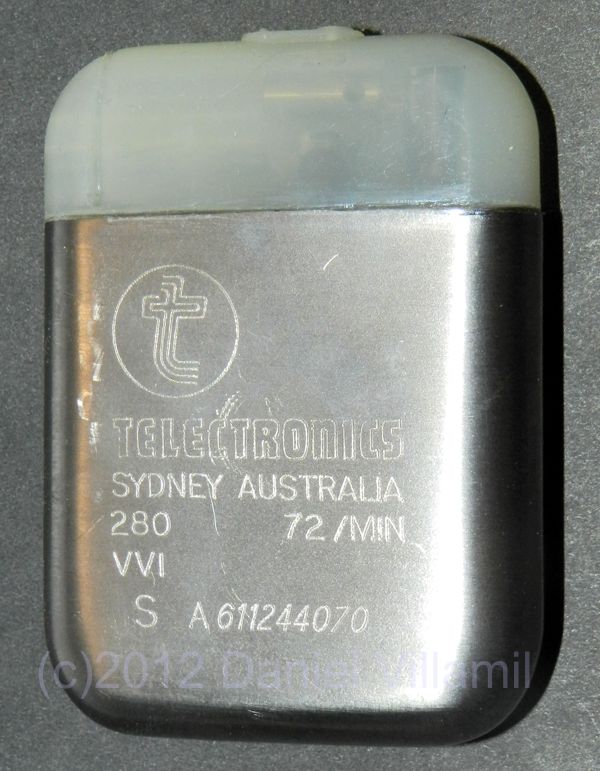 25 years ago, I quit my last full-time music industry job and found work in medical devices. Admittedly, too much of my motivation was money. Eventually, it turned into lots of money. While the money was good, one of the first things I noticed about the people I worked with was “this is not my culture.” While there were a few outdoor recreation types in Engineering, most everyone in medical devices and medicine was focused on making money, getting promotions, and acquiring stuff. I could easily go for months without hearing anyone hum atonally to themselves, let alone sing or play a musical instrument. I felt a little like a Stranger in A Strange Land. Or a lot.

