
I’ve had “sloppy luck” for most of my life. I’ve never won a lottery, but I’ve won some stuff at company parties. My “career plan” was squashed in infancy, but my emergency “plan” (to grossly abuse that concept) turned out surprisingly well. There is nothing special about my genetics, but I have often “been able to take a punch” of all sorts and make some kind of comeback and keep going. Best of all, I have had a life full of wonderful, reliable, loving, brilliant friends. That is plain good luck.
 One of my first sloppy luck moments was when I was 11 or 12-years-old. On a whim, I signed up for the Columbia Record Club’s “special offer.” I remember it being 10 for $1, but that was a long, long time ago. First, I had to pick a music genre and I didn’t know squat about music except for my parents’ 78-rpm collection that I’d listened to in the basement of our home when I was supposed to be baby-sitting my 8-year-old brother. All of the records in our basement were from the 1940s or earlier and that big wooden console record player/radio had a tone arm that probably weighed a couple of pounds. My mother had died just a couple of years earlier and the records might have been hers. I never really saw any evidence that my father cared about music, other than singing in the choir or pep bands leading cheers for his basketball teams. The records I’d experienced were “classics” by Spike Jones, Duke Ellington, Tommy Dorsey, Glenn Miller, etc. On a whim, I picked Jazz and from among the jazz record category options I picked:
- An Electrifying Evening with The Dizzy Gillespie Quintet (still my all time favorite record)
- Birth of the Cool, Miles Davis
- Sophisticated Swing, Cannonball Adderley
- Brazil, Bossa Nova, and Blues, Herbie Mann
- Silver Vibes, Lionel Hampton
- Cool Velvet, Stan Getz
Over the next year, every month the “pick of the month” card would show up in the mail and I’d procrastinate sending it back to reject the selection because I didn’t even know how to buy stamps. (The card with the original offer was postage paid.) After most of a year, I had a pretty decent collection of jazz albums and owed Columbia Record Club more than $100 before they stopped sending me the “pick of the month” selections. I listened to every one of those records practically until I could see light through the grooves. With those monthly picks and the Columbia catalog I discovered Davis’ “Kind of Blue,” “Brazil, Bossa Nova & Blues” by Herbie Mann, “Time Out” by the Dave Brubeck Quartet, Wes Montgomery’s “Movin’” and ”Bumpin’” and special members-only records by Charles Mingus, and Thelonious Monk.
After receiving a half-dozen unpaid-for-records , Columbia Record Club became less friendly. In fact, their letters became downright threatening. Their pick of the month was “only” $7.95, but after shipping-and-handling it was closer to $10. It’s only fair to mention that 1961’s $100 is the equivalent of more than $1,000 today. My father’s high school teaching annual salary was about $5,000 that year. For quite a while, I managed to intercept the mail before Dad got home from school, but eventually he spotted on of the “final notice” envelopes and opened it up. By then, I was getting the occasional bill collector telephone call, too. After chewing my ass into bite-sized bits, Dad got one of the bill collector calls and the conversation went something like this:
“Hello, who is this””
“My name is ____ and I’m calling for Columbia Record Club. Is this Mr. Thomas Day?”
“No. This is his father, Fred Day. What can I do for you?”
“Thomas has received almost a dozen records from our company and he owes Columbia Record Club $__. How do you plan to pay for the records?”
”I don’t and if you know how to put a lien on an 11-year-old boy I suggest you proceed with that action. However, I am not responsible for his bills and you should be ashamed of yourselves for being foolish enough to give credit to an 11-year-old kid. Tell you what, though. I’ll put all the records in a box and leave them on the front porch and you can come pick them up at your convenience.”
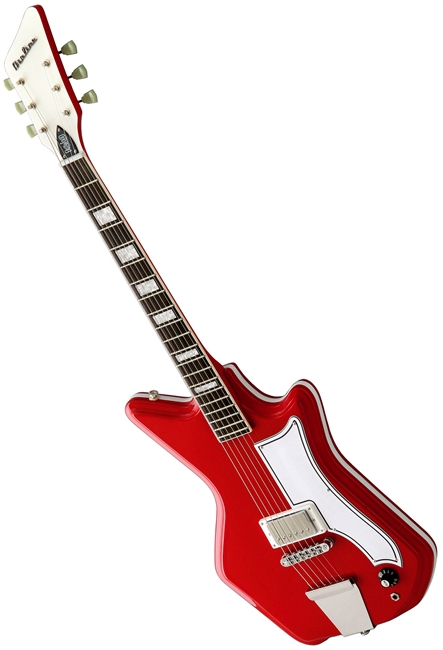 We didn’t hear from Columbia Record Club again and Dad, eventually, let me take the box of 33rpm records back to the basement where I totally wore out all of them. Listening to Gillespie and Davis inspired me to want to play trumpet. Being always short on cash, I eventually inherited an awful Conn cornet from my step-mother’s brother and discovered that I had no talent for teaching myself trumpet, let alone jazz trumpet. A few years after taking up the trumpet, I managed to score an awful Sears Airline acoustic guitar. After struggling with that instrument for a while, I used my paper route money to buy a $35 Airline electric guitar from my local Western Auto store. Thanks to my Columbia Record Club jazz exposure, no part of early 60’s vocal music appealed to me, but I could get my teeth into The Ventures, Dick Dale, The Surfaris, and, thanks to the local music magician, Howard Roberts.
By the time the Beatles and the British Invasion straggled into the Midwest and KOMA radio, I had no interest in either British muppet music or vocals in general. Somewhere in that period, I found WLS out of Chicago and soul music. Imagine hearing Wilson Picket, James Brown, Otis Redding, the Staples, the Bar-Kays, or anything from Motown before you hear the Beatle’s chipmunk voices and the Stone’s limp R&B imitations and you’ll have a clue where I was coming from as a wannabe musician. It wasn’t until I heard “The Freewheelin' Bob Dylan” before I developed any kind of appreciation for lyrics.
I consider all of that sloppy luck. Every bit of it, from mailing in that Columbia Record Club enrollment card to picking “jazz” as my musical preference to that music leading me to R&B instead of R&R pop to the trumpet-to-guitar progression to becoming who I am as a person and a still-tryin’-to-be-a-musician 76-year-old. It was all good luck.


