I left medical devices, mostly willingly, in mid-2001. It couldn't have been a much dumber time to leave a well-paying, secure, undemanding (not including ethical considerations) job. A few months earlier, the tech economy had crashed when G.W. Bush was elected, blasting any hope for US investment in alternative energy or tech manufacturing and taking a fair amount of my retirement savings with it. A year after that, with US national security sidelined while Republicans raped and pillaged the economy, the towers would fall in New York and the economy took a bigger hit. At least, by then what was left of my savings was securely isolated from the stock market. Thanks to a series of incredibly lucky associations, in particular a friendship with Michael McKern, I fell out of one lucrative but painful situation into a far more complicated, lower paid, and infinitely more fun collection of situations. As the song goes, "one thing leads to another."
25 years earlier, I had been working as an engineer for an Agricultural Equipment Company and, on the side, I was trying to start an audio services and equipment company with a friend. We called that company “Wirebender Audio Systems.” So, my day job was designing, testing and developing, and troubleshooting some fairly weird and complicated electronic control systems for guiding half-mile long center-pivot irrigation systems. And my nearly full-time Friday through Monday morning dream job was running a recording studio, a live sound company, and an audio systems installations business.
There was only one place where those two very different vocations met: the agricultural equipment company often installed large, noisy diesel-powered generator systems close to suburban housing developments or at the edges of small towns. This would be in the late 1970s, when there were still some rules about disturbing the peace, unnecessary noise, and the sort of thing that no longer exists in this rapidly collapsing empire. So, one of the tasks I was given was to design an acoustic enclosure to contain a substantial amount of the noise (~30dBSPL) those diesel motors generated. Other than the very rudimentary acoustic background that most musicians have a slight grip on and a bit more information I had collected in building our recording studio facilities, I knew very little about acoustics. Lucky for me, every other engineer in the company knew nothing. So, I got the assignment. Those were also the days before most companies employed consultants for every out-of-the-ordinary assignment.
It seems hard to imagine today, but there was a period when large, profitable American companies, relatively willingly, provided education resources for employees. And my employer was no different. To assist me in background for the assignment, the company paid for about 12 hours (three classes) of acoustics-oriented physics courses at the University of Nebraska and several out-of-state industry seminars including four days of the Acoustical Society of America (ASA) national meeting at the Massachusetts Institute of Technology (MIT) in Cambridge, Massachusetts.
Today, there are several companies that specialize in prefab acoustic isolation enclosures, although not many are intended for four-season outdoor applications. And absolutely none of them would have fallen into the budget that I was given for the fabrication I had to design. I wish I had at least one picture of one of the finished enclosures, but the designs were proprietary and back in the film days I didn't take many pictures. At least for me, that experience turned into a lot more than a one-off industrial construction design.
One of the half-dozen routes I went for earning a living after leaving medical devices, was acoustic consulting. The Twin Cities was a dumb place for a 53-year-old to start that kind of career, since there were a plethora of actual acoustic experts there at that time. But, I found a niche and several of those local experts turned out to be incredibly helpful, generous, and a few became good friends. My membership in ASA and some of the connections I made there didn’t hurt, either.
One of those lucky friendships, David Berg from Orfield labs, recommended me to Bob Feldman, the owner of Red House Records. Bob was trying to help the Cedar Cultural Center with acoustic problems in their performance hall. I have been retired since mid-2013 and I haven't done much of anything that wasn't purely recreational since retirement. Today it's hard, even for me, to remember how incredibly hectic and chaotic a good bit of my life was back then. That is as close as I can come to an excuse for not knowing why the project with Bob and the Cedar fell off of my radar.
Bob's big focus was to make some quick improvements to the facility before Tony Rice and his group—The Tony Rice Unit with Mike Marshall, Darol Anger, and Todd Phillips—performed and recorded at the Cedar sometime between late 2001 and 2004. (Sorry, I can’t nail it down any tighter than that, date-wise.) There wasn't much we could do in a short time that would even be musically noticeable, let alone an actual improvement. There was a lot less we could do with the almost non-existent budget the Cedar had for acoustic treatments. So, that project fell into the background noise of my life.
I had the really special opportunity to work with Bob on two Red House artists' concerts and the Tony Rice show and I did some work on one song for a Red House compilation record. It never felt like work with Bob. He loved the music, the venue, the audiences, and the artists and that feeling was infectious. I either didn’t know or had forgotten that Bob died in early 2006. He was only 56 and two years younger than me. When this story started to form in my mind, I fully expected to see that Bob was retired or still going strong. So, I was surprised to see that he wasn’t and that Red House Records was no longer a Minnesota label, as of 2017. 2017 was obviously a bad year for many things.


 One of my first sloppy luck moments was when I was 11 or 12-years-old. On a whim, I signed up for the Columbia Record Club’s “special offer.” I remember it being 10 for $1, but that was a long, long time ago. First, I had to pick a music genre and I didn’t know squat about music except for my parents’ 78-rpm collection that I’d listened to in the basement of our home when I was supposed to be baby-sitting my 8-year-old brother. All of the records in our basement were from the 1940s or earlier and that big wooden console record player/radio had a tone arm that probably weighed a couple of pounds. My mother had died just a couple of years earlier and the records might have been hers. I never really saw any evidence that my father cared about music, other than singing in the choir or pep bands leading cheers for his basketball teams. The records I’d experienced were “classics” by Spike Jones, Duke Ellington, Tommy Dorsey, Glenn Miller, etc. On a whim, I picked Jazz and from among the jazz record category options I picked:
 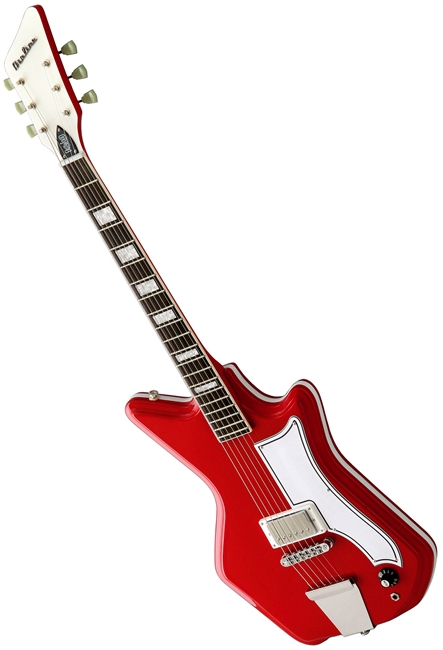 We didn’t hear from Columbia Record Club again and Dad, eventually, let me take the box of 33rpm records back to the basement where I totally wore out all of them. Listening to Gillespie and Davis inspired me to want to play trumpet. Being always short on cash, I eventually inherited an awful Conn cornet from my step-mother’s brother and discovered that I had no talent for teaching myself trumpet, let alone jazz trumpet. A few years after taking up the trumpet, I managed to score an awful Sears Airline acoustic guitar. After struggling with that instrument for a while, I used my paper route money to buy a $35 Airline electric guitar from my local Western Auto store. Thanks to my Columbia Record Club jazz exposure, no part of early 60’s vocal music appealed to me, but I could get my teeth into The Ventures, Dick Dale, The Surfaris, and, thanks to

 The middle one is an example of a dumbed-down imitation of a fairly common DAW guitar pedal screen; like the one in Logic Pro. A big difference between the DAW pedal boards and the Spark is that you can’t reshuffle the order of the pedals to suit your purposes.
 Before I replaced my current set of D’Addario’s, I examined the strings and, especially, the coating and listened carefully to the sound and measured the output on my Composite Acoustics OX with both the pickup and a Shure KSM 141 microphone. I’m going to make a wild claim here that the CA OX, being a carbon fiber guitar will do a good job of neutrally demonstrating whatever character there might be to guitar strings. I could be wrong, so sue me.
  The ClearTone strings were a fail right out of the package. The first thing I noticed about the ClearTone strings was for the first time in the 6 years I’ve owned my CA OX the low E string buzzes like crazy. With the same gauge D’Addarios, the guitar rang clear and clean on all strings. It is only the low E that is rattling and I have no idea what that means, although the whole set feels lighter than the D’Addarios I’d just removed. [
 Between 1973 and 1978, I absolutely despised Steve Martin. There, I said it and it’s true. Yep, that funny guy on the right side of the pair of “King Tut” era Steve Martin pictures was a guy I regarded as a thief, at best. If he was in a movie, I wouldn’t watch it (I didn’t see “The Jerk” until ‘79 or so.). If he was on SNL or any other television talk show, I ignored it. I hated the man.