Showing posts with label red wing. Show all posts

Sunday, February 19, 2023

Kick Drums and SM58s

For the first time in a while, I “experienced” a live sound-reinforced show last Friday night. At Red Wing’s Sheldon Theater, to be specific. I’d volunteered to monitor one of the Big Turn Music Festival venue’s gate and had occasional moments to wander the theater to hear the three acts from that evening. I’m sure you wouldn’t be surprised to know I was less-than-impressed with the sound goober’s “work.” In fact, it was about as SNAFU as is typical. The goober clearly believed impressing the audience with how much bass (exclusively kick drume) he could shovel into the mix was more important than attempting a musical demonstration. Nothing new there, but it was particularly depressing with the evening’s first act, Tony Cuchetti’s band, because Tony’s powerful voice did not blend well with a kick drum-dominated mix and the other musicians in his band, including the bass player, suffered the same clueless sonic disaster.

From my perspective, if the sound is obviously “reinforced, “ the sound goober is a screwup. Obviously, there are types of music where the sound has to be reinforced because the input is garbage and must be manipulated to resemble music: DJs, too much of hip hop, most metal, and almost all of the crap that falls into today’s Top 100, for example. But music and musicians only need subtle assistance from the sound goober to carry their music into the cheap seats. Doing more than that is just a sound goober projecting his/her own insecurities, sort of like the Harley Davidson characters trying to disguise their lack of motorcycling skills with the “loud pipes save lives” nonsense.

After my Sheldon shift, I took in a couple of the other venues and, Saturday, returned to tour the lot of the bars, stores, and churches that had volunteered to be in the Big Turn. A big part of the problem with several acts I heard over the two days was the chronic poor choice of vocal mics for every kind of singer. Over the past 50 years, I haven’t been shy about voicing my opinion of Shure’s SM58 workhorse. The mic is a brick, almost impossible to damage with all sorts of abuse, but it has limited musical applications. The mic’s bandwidth, proximity problems, self-noise, and polar pattern severely limits the SM58’s practical application; especially on quality voices.

Even more confusing is the fact that most vocalists don’t seem to know or care about the damage this lowfi hammer does to their voices. (If your own tool is an SM58, every voice sounds like a nail?) Why do musicians insist on playing their own instruments through their own amplifiers while appearing to be totally indifferent to the instrument their voice passes through? It’s not like it would be complicated to simply remove the 58 from the stand, clip and all, and replace it with a more suitable mic. If the goober can’t deal with the slight (or major, in the case of a condenser) variation in microphone sensitivity, that will be the least of your problems.

The advantage a serious vocalist would have in knowing how to replace the default poor microphone choice with their own well understood and properly selected replacement would be a night-and-day difference in the performance outcome. You could defuse any objections by telling the goober, “My RE20 (for example) has, essentially, the same sensitivity as your SM58, so you won’t need to change the preamp levels. However, I would like to have the vocal EQ set flat and I have selected my own high pass filter values. Thank you.” Or, in the case of a condenser, telling the goober how much gain to take off of the pre.

You might have to actually walk to the sound board to verify the goober knows how to do those things, but it would be worth a trip. It is always a good bet to assume incompetence when it comes to sound goobers. If you are pleasantly surprised, say so. One of the reasons bottom-of-the-barrel types end up running live shows is that the job is too often thankless. If no one notices a good job, the techs who know what they’re doing end up doing something else and the ones who don’t end up wreaking every show they touch.

Friday night, the one place the 58 did an acceptable job was with the last act’s “vocalist.” He was an atonal screamer whose range began where Tony’s left off. and never approached anything resembling musical. I still couldn’t understand the lyrics, but I wasn’t particularly tempted to put much effort into that task. 

Tuesday, February 15, 2022

This Is How Stage Monitors Are Supposed to Work

Back in 2015, I was a regular volunteer back stage at the Red Wing Sheldon Theater. Initially, I did volunteer work pretty much the same way I’d worked paying gigs for the previous 40-some years. I’d show up for the unloading and setup and stand around back stage out of the way until the show was over and be there for the tear-down and load-out, staying until all of the cables were wrapped and put away and the stage and theater were swept up and ready for the next show. Almost like a theater employee, except without a paycheck. I don’t have any idea how many shows I worked, but it was a lot for the first 2-3 years we lived in Red Wing.

One of the weird things about volunteering is that most of the people who get paid to do these things are often way too impressed with themselves and they act as if they are granting you a favor in letting you do the grunt work. I’d run into that often long before I retired and was pretty much on a hair-trigger, ready to escape quickly on the first signs of that attitude when we moved to Red Wing. My tolerance for bullshit from “kids” (anyone 20 years younger than me or more) has slowly vanished with experience over the last 20 years. Lucky for me, the Sheldon’s Production manager, Russell Johnson, is not that kind of manager. As a professional lighting guy and stage manager, Russell actually appreciated my audio experience and as a result I got to do some really fun shows and escape the stuff I usually don’t like about live music: often that includes the actual live performances. My habit, after a few months of establishing myself as useful, was to stick around through setup and the sound check and if the sound check was a typical noise-producing disaster, I’d sneak out the back stage door and call it a night. Live music rarely gets better as the evening proceeds and if the band and/or sound goober are deaf at the beginning they will only be much worse a few minutes into the show. Been there, done that for decades. Don’t have any reason to suffer through it again. And Russell was fine with that.

I’ve been an Arlo Guthrie fan since the Alice’s Restaurant days, the record and the movie. So, when the Sheldon booked Arlo in 2015 I signed up to be part of that crew. The initial setup was pretty straight forward with the band bringing most of the gear they needed flushed out with some of the Sheldon’s backline and stage equipment. The sound check started off with the band, which included his kids—Abe and at least one of his daughters—doing what bands usually do with a sound check: making individual monitors and mixes as loud as possible. I’d pretty much decided not to stay for the show at that point.

After a bit of the usual musical ego-pumping, Arlo came out, moving to his mic at the front of the stage and listening for a bit. A few moments of that and he asked to have all of the monitor sends cut so he could hear the FOH mix. He had some suggestions for Russell about the house mix and asked for a bit of his voice and guitar added to his stage monitors. After he was satisfied, he turned to the band and said, “That’s good for me. You can do anything you want with your monitors as long as I don’t have to hear it.” And that is the way you manage stage volume. After Arlo’s sound-check moment, I decided to see if I could stay for the show and Russell let me find a SRO spot on the 2nd balcony where I could hear and see the show. It was terrific, musically and sonically.

After that, I had a spectacular experience with Leo Kottke at the Sheldon, a terrific evening hanging out with Buckwheat Zydeco, an excellent Ladysmith Black Mambazo show,  and a couple of weirdly fun experiences with the Southeast Tech “Strings, Winds & Brass” shows in 2016 & 2017. Eventually, general disappointment in amplified live music plus some conflicting opportunities working with Hobgoblin Music and the Crossings in 2016 and 2017, ending with a show with one of my all-time favorite live performers, Peter Mayer at the Crossings, convinced me it was time to hang up my live music tech shoes.

My days of lugging heavy equipment are in the past. I don’t need to injure myself doing stuff I would just as soon avoid (I’m talking to you, Elvy. I don’t need to rupture anything lugging giant pots full of weeds around the yard and house, either.) and 99% of amplified live music is at least 50% distortion, 40% crappy mix, and rarely more than 10% music. I’ve seen everyone I have ever wanted to see and a few of them were even worth seeing. Almost nobody is worth what it costs to see them in concert today. Snarky Puppy put the last nail in that coffin in 2019. A lifetime of seeing most of the big name bands when labels were subsidizing tours and tickets were rarely more than $10, working shows and getting paid for being there, getting free concert tickets as an industry perk, and being invited backstage by someone in the band or the touring company has probably given me a severely devalued outlook on what live music is worth. But I’m glad I was there on those few occasions when everyone involved was more concerned with the music and the audience. Those are the shows I remember best.

Monday, August 26, 2019

Being A Musician

Lots of people believe that there is something sort of magical about being a musician or being “musical.” A friend who is the poster child for all things musical once came to a local weekend jam session when he was visiting for a week. Afterwards, he said something about the folks from that group not being “musicians.” And I asked what he meant, mostly because I have always been fairly embarrassed at the fact that after playing guitar for almost sixty years I still suck. 

He said, “There are three things that you have to have to be a musician; 1) you need to know music theory and technique for your instrument, 2) you need a decent sense of rhythm, and 3) you need to listen. If you have any one of those qualities, you could be a musician. If you have all of them, you probably are a good musician. Most of the people in that room (the local jam session) couldn’t make a claim to any of those qualities.” 

And he was right. 

To be fair, some of the people in the jam session were beginners; regardless of age. However, my friend’s #3 point, listening, is something anyone who wants to be a musician should develop really early. Honestly, it should come easier than it apparently does. 

One of the many things that drove me away from live performance was the fact that it was close to impossible to put together a group of 4 or more people who would bother to listen to the output of the group. In the recording studio, you can compensate for your performers’ inability to listen to the music. You track every instrument and every voice, one-at-a-time, and you mix the outcomes into something that may resemble a “performance.” Getting human beings to act like musicians is, sometimes, as close to impossible as getting old white people to think about anything but themselves. 

For example, that same jam session occasionally attracts a local character who thinks of himself as being almost famous. He knows a half-dozen songs, mostly old time bluegrass/country tunes, and he plays and sings them really loud. The format in this session is generally set and designed so that everyone gets a chance to pick a song and sing it; if they want to. You can always pass on your turn, but everyone usually gets one. Unless “almost famous” shows up. He uses every pause in the action as his moment to either tell a story about himself or to start hammering away on another song. At best, the cycle goes: someone in the group picks a song, “almost famous” does a song, someone else does a song, “almost famous” does another, and so on. 

Not surprisingly, “almost famous” complained that he couldn’t hear the other players guitars over his own instrument; especially when someone took a solo on one of his tunes. His solution was to get a PA into this normal, reverberant room. The person he complained to, one of the better players in the group, suggested that he try to hammer his guitar more quietly when others were playing. His response was, “This guitar just doesn’t do quiet well. It’s really loud.” I was fortunate not to be eating or drinking anything at that moment. Otherwise, I might have sprayed the group. 

Guitars, especially acoustic guitars, are capable of substantial dynamic range. Guitar players, especially electric guitar players, are rarely able to shut up or lower their volume at all unless you put sheet music in front of them. This particular acoustic guitarist had never been in a situation where he had to listen to anyone else while he played. At almost 70-years-old with five decades of “music" performance behind him, it’s probably too late for him to learn the most basic requirement of being a musician. That is something really scary to consider.

Monday, February 25, 2019

Red Wing’s Big Turn Music Fest

The better pro sound equipment gets, the worse the sound goobers are. That was my opinion of my first day at the 2019 festival. Part of that low opinion came from the fact that I made poor choices of venues and was stuck in one place for 4½ hours of the first day of the festival because I’d volunteered to help out with a venue. My venue assignment was the Red Wing Bicycle Company and Outfitter, which is one of the city’s coolest businesses but, unfortunately, doesn’t get the top acts. The kid running sound for our venue was . . . inexperienced. Like most of the people who end up in live sound, he didn’t know much about the equipment he was mishandling and knew even less about room acoustics. Friday’s first two acts, Theyself and Vild, didn’t give him much to work with. The wrap-up group, Loons in the Attic, had a great start, but degenerated into a noisy jam band and the sound system and mix totally came unglued. Great bass player, though. Between the musical misdeeds and the sound goober’s incompetence, I went home with a splitting headache and aggravated tinnitus.

Rudely, I know, I had to ask the goober if he paid for an “education” to become that incompetent or if it just came naturally to him. I’m pretty sure he didn’t hear well enough to know what I’d said.

I ended my Friday meeting my wife at Fair Trade Books and wandering over to see Charlie Parr at the St. James Hotel’s Portside Room. The Portside Room is a decent meeting room and a mediocre acoustic environment for music. I didn’t identify the source of this speaker system, but my takeaway from Charlie’s set was that the problem was either a miserable sound system and a deaf sound goober or just a deaf sound goober. It’s hard to imagine butchering a one piece act, but those nitwits managed it. I’ve worked with Charlie in the past and heard him a few times before in outdoor concert settings and he’s easy to work with, a lot of fun to hear, and talented. None of that straggled through the sound system. A more tolerant music fan, Brian Stewart (Treestrings Music) and his wife, Brenda, were at the show and they thought I was too hard on the sound goober. Knowing something about Charlie and his music, they said “it wasn’t that bad.” (PC code words for “it was awful.”)

So, I asked, “Did you understand anything Charlie said in his show?”

Brenda said, “I think I heard him say the word ‘soul’ a couple of times.” Brian didn’t get a single joke and couldn’t identify a single song lyric.

My case rests.

Saturday, I had no obligations. I skipped the Saturday Morning Treestrings Jam, stopped in at the Southeast Tech Guitar Program’s swap meet and bought a DiMarzio pickup I absolutely don’t need, and bought my wife takeout lunch to make up for abandoning her for the day. (Don’t knock it if you haven’t tried it. Works for me.)

I started my festival day at the 223 Barrel House with Ryan Mingone. The Barrel House has miserable acoustics, even for a tunnel-shaped bar. So, I crowded up to the “stage” with about ½ of the crowd and listened to Ryan’s keyboard work and vocals. Not bad and a tolerable start. From there, Red Wing Elks Club where Sevenseven slaughtered a variety of Minnesota-based pop band songs. I sat with some friends who are much more versed in Minnesota music and after I was the first to identify Prince’s “Little Red Corvette” it was obvious that “cover band” is a loosely-used term for Sevenseven. There were occasional moments when one of their covers sounded familiar, but mostly . . . not.

From there, I hiked past 3 or 4 venues and listened outside momentarily on my way to the Christ Episcopal Church (I know!), which is one of the festival’s coolest sounding venues, for the end of Land at Last’s set, Ben Weaver, and a brief refresher of Charlie Parr to wipe the bad taste of his Monday performance from my memory. The guy running sound at the church was not a “kid,” but a grown man with a decent pair of functioning ears. He did a fine job and disproved my theory that those weird faux-array speakers are incapable of reproducing music. Ben’s set was especially fun because . . . Ben is a cool guy and a terrific songwriter/musician. I complimented the sound tech, a couple of times, before I left. Snow was beginning to fall about the time Ben’s set ended and was coming down “briskly” when I left.

From there, I headed to the St. James, but The Old Fashioneds just didn’t do much for me. 30 seconds of rockabilly is about my limit. So, I kept heading toward the river for the Red Wing Arts Depot Gallery and the Constellation Band, a four piece, young jazz group. To be honest, I mostly wanted to look at the art on display and see where a band would perform in the old train station. The Constellation Band could have been the highlight of my evening. They started off sluggish, but kicked into gear after the 1st tune and just got better as the set went on. The young man who sound tech’d the show did a fine job and I complimented him on his work. He said, “It was all them,” but it wasn’t. Sometimes it’s about what you don’t do, rather than what you do that wasn’t necessary or desirable.

From there, I climbed the hill back to downtown and the Sheldon Theater for Dessa’s set. I’ve seen Dessa a few times, but it was a while ago, when and before she was an “artist in residence” at McNally Smith and, maybe, once after that. Her music has evolved dramatically since then. I do not know how to describe her performance other than “she knocked it out of the park.” Again, the sound tech (her guy) did a fine job and I told him so. I checked my truck on the way past and it had about 6” of snow cover and I wondered if the snow plows would start to bury me or if it would get towed and ticketed if I didn’t move it. I wondered all that, but kept walking.

My last stop was back at the St. James Portside Room because I am a glutton for punishment. The People Brother’s Band looked like a good bet, an 8-piece R&B group with several good vocalists. The band started off decently but slowly began to degenerate into blubbering subwoofer dominated garbage heavily doctored with massive midrange distortion. Eventually, either the band lost control of their stage volume and sabotaged the FOH goober (unlikely, since during the sound check the most consistent hand signal from the band was "turn it down") or the sound goober went even more deaf than he started and completely forgot what music sounds like; substituting industrial noise for anything resembling melody, harmony, rhythm, and clarity.

I’d planned on seeing a couple of other bands after that, requiring either a walk back across town or moving the truck. I decided to clear a foot of snow off of the truck, move it, and see how I felt after all of that. A couple of nitwits almost wiped me off of the planet as I cleared the driver’s side of the truck and I think that experience and my ringing ears (although Saturday night I wore earplugs for all but two of the shows) convinced me I was done for the night. Getting up my driveway and into the garage was an adventure and I think I made the right decision. Still, I would have liked to have seen Light45 and General B and the Wiz. Maybe next year.

Monday, October 8, 2018

DiGiCO ROI Baseline

In case you thought I was being hard on the Red Wing goofballs who grossly overpaid for the theater's DiGiCo SD9, here's what the resale is on the big boy's DiGiCo, the D5 Live (https://atlanta.craigslist.org/atl/msg/6717399160.html). The D5 Live is a substantial improvement, user-friendlyness-wise, over the SD9 with 4 much more user-friendly screens that actually make a little sense when you use them of the one poorly located screen that is totally disassociated from the channel faders. This used Craig's List console comes with a "road case and 100 meter coax cable. Also have a second D5 with bad power rail and needs power supplies rebuilt. the 2nd can be used for spare parts or fixed and it comes with a brand new road case and I'll just let you take it for free. I have put the engine from the broken console in the working console and it works fine so it would give you a spare engine.” So you get 1 ½ Digico D5’s, a road case, and coax cable for $3200? Red Wing paid $60k-80k (depending on how you read the bid) for a D9 that still can’t talk to any recording rig and was about 90% of the way to End of Service (EOS) and nearly out of warranty (a measly 1 year warranty, the industry minimum) before it the installation was complete.

The damn things don’t hold value well, do they? Any rational user would expect to see no more than a 1 year ROI on this kind of technology, but who's counting?


Friday, February 12, 2016

Getting My Geek Vitamins

I’m obviously vitamin-starved. At the last Fair Trade Book Store open mic, I blew off my usual mediocre acoustic guitar piece and brought my MacBook Pro to demonstrate a vintage musical piece to the small group of musicians and musical kids. My wife warned me to “keep it short,” so I wouldn’t bore anyone (meaning her). I did my best to make it brief, but mostly what I pointed out to myself was how much I miss having a few friends to talk about recording, recording technology, and music.
For a few years, working at Musictech (then McNally Smith College of Music) was a full emersion geek-out experience. Every day, I was close to instructors and students who not only loved music but who were fascinated with the physics, electronics, acoustics, and psycho-acoustics that is core to the production of modern music in any of its forms. The geek factor slowly vanished from the school as many of the tech-intensive instructors left and were replaced by people whose claim to fame was Pro Tools expertise. I guess there is a geekiness associated with being really good with function and quick-keys, but it’s not something I care much about. You can polish turds until they shine, but they are still just little bits of crap. Without some knowledge of how the physical equipment works (microphones, preamps and signal chain, acoustics, signal processing, and human hearing), knowing how to cut up performances into well-aligned bits just isn’t very interesting.

So I retired and moved from the Twin Cities to Red Wing, where we made new friends, found more things to do than we have time to do them, and picked up some new hobbies (like guitar building and cabinet-making). It turns out that I miss some of what I lost.

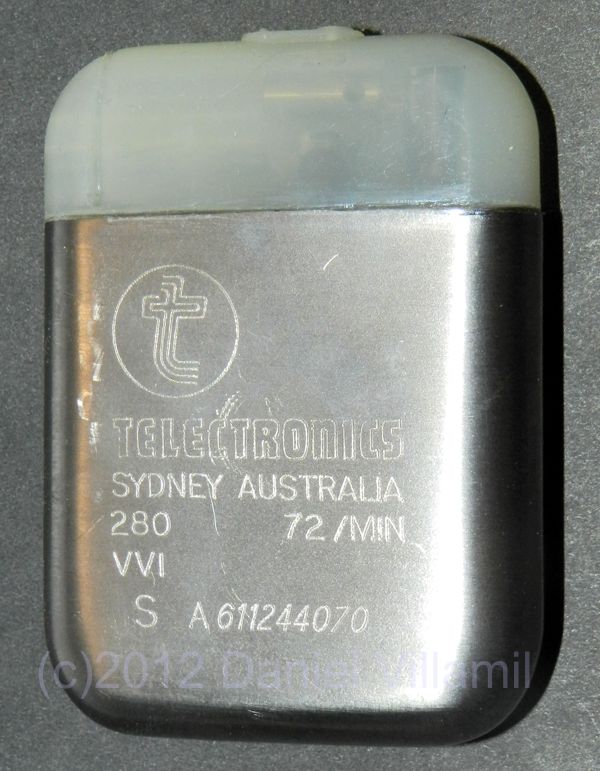
25 years ago, I quit my last full-time music industry job and found work in medical devices. Admittedly, too much of my motivation was money. Eventually, it turned into lots of money. While the money was good, one of the first things I noticed about the people I worked with was “this is not my culture.” While there were a few outdoor recreation types in Engineering, most everyone in medical devices and medicine was focused on making money, getting promotions, and acquiring stuff. I could easily go for months without hearing anyone hum atonally to themselves, let alone sing or play a musical instrument. I felt a little like a Stranger in A Strange Land. Or a lot.

I guess I have to do something about that. It turns out that not working with musicians and technical people is more of a deprivation than I expected. Go figure.

Wirebender Audio Rants

Over the dozen years I taught audio engineering at Musictech College and McNally Smith College of Music, I accumulated a lot of material that might be useful to all sorts of budding audio techs and musicians. This site will include comments and questions about professional audio standards, practices, and equipment. I will add occasional product reviews with as many objective and irrational opinions as possible.