Monday, May 21, 2012

Is It Music?

In an article titled "In 5 to 10 years' time, computers might catch up with traditional technologies. Might." in David Mellor's Recording-Producer.com website, Mellor described giving up on his iPad because after trying the device for a collection of tasks and discovering it was a poor tool for reading, writing, and anything else he had hoped it would be good at. His realization from that was, "Perhaps the iPad isn't actually all that cutting edge. Perhaps even fully-fledged computers are not as cutting edge as we seem to think they are."

He goes on to a variety of comparisons of musical devices and applications that might not be as wonderful in their computer form as many have claimed. The main gist of the article was a comparison of the visual resolution of a magazine (SOS, in this case) and what it takes to get to that resolution on a computer screen. He pisses off a few readers and they replied with comments like "But try also making music with that magazine. That iPad has some very interesting apps for making music in novel ways. That magazine is limited to one function, albeit it does that one thing very good."

I thought about this for a bit and realized that I've been making this same argument for decades. So, my reply was:

I'm always entertained by the claim that users are "making music" on their iPads. If grouping stolen musical loops and repeating thumping and squeeking noises is "making music" and your standards for "music" are low enough that factory sounds fit the bill, I guess the claim has some weight. At best, this noise is as musical as the stuff that comes out of grade school music classes. Until I see someone actually play an iPad like a musical instrument with some skill and creativity beyond that required to play Guitar Hero, I'm reserving my definition of "musical instrument' to actual instruments, of which synthesizers barely qualify because of their user-hostile interfaces beyond the piano keyboard. 


This is a concept with which I've had some sympathy for decades. We're hard pressed to find examples of better-made records from the digital era than from the multi-track tape years. It's not that hard to find examples of music with equal or greater emotional impact from the direct-to-disk or mono era. Digital tools are not ergonomic, on the average. They are in their infancy and may remain there forever because technology keeps marching-on from one gimmicky menu or knob-and-button format to the next without consideration of musician convenience or play-ability. As humans, we might not survive long enough to see computers as successful musical instruments. It took centuries for what we currently recognize as musical instruments to mature.

Not that long ago, I attended a seminar where an expert from Ableton Live! demonstrated the "music-making" capability of that program. I was incredibly unimpressed. The technology demonstrated wasn't the unimpressive part of the demo, the music was. "Fucking mindlessly boring" would be a compliment to the silly noises the demonstrator produced. There is a crowd of folks who imagine "dj music" is actual music, but they have grown up on repetitive video game noise and their tastes are childish, at best. These things are toys, not musical instruments, and the music reflects that lack of seriousness. The big difference between a Linus Peanuts piano or a Mickey Mouse wind-up guitar and an iPad is the price tag. The musical value is about the same. So, this isn't a generational complaint, it's more of a response to the effective marketing these toys have received.

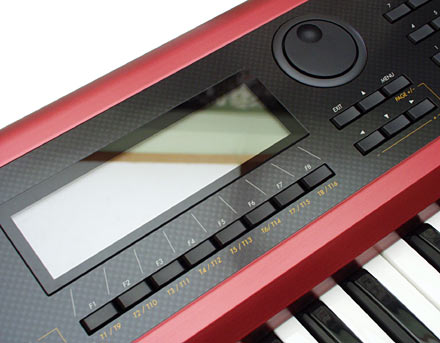
After decades of waiting for synthesizers to become user-friendly and creativity enhancing, I've given up on the whole idea. The best we've seen from the hardware manufacturers has been cumbersome button-and-menu driven combinations that cater to "computer-users' and not to musicians. I have seen a half-dozen technically-inclined and musically capable kids (and one or three instructors) unsuccessfully fumbling over a synthesizer's menu and connector options, trying to figure out how to get the damn sustain petal to work properly. Imagine how tough it is to get an actual musical note if the pedal operation is that complicated.

Couple that hassle with the fact that hardly anyone has found a creative thing to do with a synth since Edgar Winter's "Frankenstein" or ELP's "Lucky Man" and I'm pretty convinced that I won't live to see a computer musical interface that is well thought-out. The engineering motivations are all wrong. Consumers want the next thing, not a thing that works well.

Monday, April 2, 2012

Another Current Show: Heiruspecs

Another of the great series from the McNally Smith Soundbite Cafe and my location recording students (this one was mixed by Joe Kokal), Heiruspecs (the Soundbite show starts at about  18:45 minutes into the program: 

We had another experience with the Heiruspecs folks just before we left Little Canada in 2015. A friend, Andrew Melby, from one of my motorcycle classes a few years back, sent out a note asking for an "abandoned house" to film in for a Heiruspecs music video. We'd just moved our stuff into our new home in Red Wing and the Little Canada house was empty when we weren't doing open houses. Twinky Jiggles/Shawn McPherson and I taught at McNally Smith at the same time, so I alread knew 1/5 of the band. We met the rest of the band during the weekend the video was filmed.

Sunday, March 11, 2012

So Much Crazy, So Much Money, So Little Common Sense


I've kept the Mapleshade catalog in my junk mail pile for almost a year. I can't throw it away because it is such a perfect example of how nutty audiophiles can get. Statements like "Floor-mounting your amp on maple gives optimum performance. This approach sounds better than rack-mounting (even slightly better than on our SAMSON) because your amp won’t be sharing vibrations with other gear" are so full of insanity that it's hard to copy-and-paste it without throwing up a little in my mouth. 

You absolutely need to order this catalog to get the whole experience. Products like the maple-housed USB-to-S/PDIF connector are incomprehensible from an engineering perspective, but statements like "Our Amish woodworkers assemble a beautifully crafted (and ultra-low dielectric absorption) maple enclosure directly to the circuit board, thereby greatly stiffening the board while creating an ample sink for draining internal board vibrations. This maple enclosure avoids the sound-muddying effects of high dielectric absorption of the usual plastic enclosures-or, alternatively, the energy-robbing eddy currents that plague any metal enclosures (eddy currents are inevitably induced in any conductive wire or plate near signal circuitry)" explain it all. Really!

Now that I've bookmarked this nutty company in my blog, I can finally throw away the catalog. However, I will always miss the picture of a Mapleshade "recording session" in the back of the catalog. This photo will have to work as a substitute, because I can't stand looking at this book for one more minute.

Monday, February 27, 2012

Mystery Palace at McNally Smith

I can't believe this band slipped by me. Mystery Palace is a local act that had some success in the last decade. I wish I'd have been paying attention, then. This is yet another recording engineered by my Location Recording Class (the MSCM portion of the show starts at about 85 minutes):

Another Current Show: Motion City Soundtrack

One more MN local band that I didn't catch when they were hot. MCS created one of my all time favorite music videos:
This was a great show, Motion City Soundtrack, mixed by Rob Frost III (the MSCM show starts at about 82 minutes):

Cool Stuff from McNally Smith and The Current: The Honey Dogs

One of my favorite classes at McNally Smith is the Location Recording class. Some semesters it's a bigger pleasure than others, but it's always a good class because it's one of the few I have that has upper level students (mostly, I'm an "Intro to" lab instructor) who know what they are doing and who care about what they are doing. This past year we picked up a new responsibility: recording a 2 hour show in the school's cafe and turning it into a 15-20 minute radio show.

About 80 minutes into the Local Show, Dave runs a show segment by the Honeydogs that is mixed by one of my students. This one was done by Jordan Goldberger.

Thursday, February 9, 2012

Gotta Have It

Tonight, the local AES chapter presented Ableton certified trainer Thomas Faulds and Ableton Live 8. Like the fool that I am, I volunteered to be his foil to compare with other pieces of software (Pro Tools, Logic Pro, Sonar, Cubase, Audition, etc).

Honestly, I can't think of a reason in the world why I would use Ableton Live. If "beats" are your kind of music, it's a great tool. I can't help but feel the difference between a beat programmer and a kid playing Guitar Hero is too fine a distance for me to measure. It's fun, but it's not playing music. For that matter, it's only fun for a little while.

After the presentation, Mr. Faulds and I got into a discussion about what's happening in professional audio software. He argued that the newest version of Pro Tools (v10) represented a microscopic advance in technology. I suggested that the most significant improvements v10 offered might be ignored by the less-than-astute customer base the industry is creating. By the industry, I mean all of the schools teaching "audio engineering," the long list of drivel genres the Grammies and the Recording Academy recognizes, what's left of the music business, and the largely deaf generation of kids who grew up with 125dBSPL of deafening earbud noise glued to their heads. 65-bit buses and 32-bit internal audio handling is pretty pointless to a 128kbs MPG customer base. We agreed to disagree.

I mentioned that there was a vanishing reason to "upgrade" to the latest version of any software because of the minimal advantages or tools to be gained for the substantial investment required. Faulds disagreed, saying that Apple will force the upgrade issue, regardless of utility or need. When I questioned how they would manage that, he said "If you don't upgrade, you won't be able to keep up with plugins and OS changes."

"That's the point. If what I have now does the job, I don't need new tools. Nothing Lion, for example, does improves on what I can do with my Mac and Snow Leopard. Pro Tools 10 currently includes machines that run 10.6.8, but the first "fix" from Avid might blow off older generation Macs that won't run 10.7. With that threat in mind, I don't feel the need to leave PT9."

Faulds continued to argue that I'd, eventually, have to upgrade to stay "current," but I ended that circular line of debate by saying, "That's true for these kids, but I'm 64. I won't live long enough to worry about any other generations of software."

There is more to it than that, though. People did perfectly professional work on Sound Tools, the first 4-track version of Pro Tools, and the first serious multi-track version of Pro Tools (2.0) that produced the first Grammy winner for Digi. Marketing squirrels can yak about why we "need" whatever crap they're pedaling, but the fact is we don't. We've had all the tools we need to record good audio, digitally, for at least a decade. The latest, greatest thing is a microscopic improvement on the original thing and having that tool won't make great music. Unfortunately, Faulds demonstrated some of that concept by showing all of the cool things Ableton Live can do without producing thirty seconds of interesting music in a two hour presentation.

The "leap" Ableton and similar software made between MIDI sequencing and loop programming is less about music and more about allowing people to play at music without having to learn how to play music. I can't help but think that is more of  a sad development than a great programming achievement. The leap made by current DAW generations is almost raising the digital bar to the last generation of analog gear. Convenience is what allowed digital recording to obsolete analog and convenience is being overrun by constant "upgrades" to software, operating systems, and interfaces.

The fact is, many people are doing excellent work on Mac G3's and 4's, using all sorts of "obsolete" software and hardware. Another fact is, in spite of Apple's constant rearranging of the deck chairs on their computer Titanic, you can always find an old G3 or G4 in great condition for less than $125. You can find G5's for about that kind of money, too. Even the early Intel Macs are barely worth $250 loaded with memory, video cards, and, even, outdated Digi interfaces don't raise the price tag much. The chances are that someone committed to staying with an old version of everything can keep doing work well into the middle of the next decade; just by looting working parts of dirt cheap "obsolete" machines. If the work is the thing, this is obviously a smarter move than spending $4-6k on a new super-fast machine and pouring another pile of money in the latest-greatest software.Windows users have even less motivation to "upgrade." WinXP works, is faster than Win7, and is still supported by everyone.

At some point, living to install software and working overtime to pay for gear should make a real musical person question the point in the whole exercise. Sooner or later, you're going to have to make some music or move into IT where nobody ever does real work but they convince themselves they are running the world.

Thursday, November 24, 2011

Getting It Right, Getting It Wrong

Sports Illustrated recently ran a portion of Jerry West's biography and it revealed that the NBA's iconic figure (literally) led a miserable life of depression and self-loathing. The NBA's logo is an artistic rendition of West on the move. Nobody moved quicker, with more determination, or with better accuracy. West played before the 3-point era, but that didn't stop him from shooting from that territory or beyond (even beyond the half-court line). Reading this biography reminded me of a day when elite athletes played for something other than giant bags of money.

That, in turn, reminded me of the real and practical reason ordinary people pay attention to elite athletes, musicians, and artists of all stripes; they remind us that humans can be incredibly special and near-godlike (by a believable definition of "godlike"). Money removes that reminder and replaces it with something more crass and less admirable. Jerry West played like a demon to quiet the demons in his head and from his past. The best musicians have something to prove, too. Songs to express, heart to expose, words to ventilate and enlighten, and sounds in their heads that need to find air to move and ears to respond. When those moments are preserved in a recording, music takes on history and it's a rare kind of history that can be repeated in the privacy of our homes or even all but inside our heads with in-ear monitors and a mobile player. To clear out the Thanksgiving dust, here's a little inspiration:

Nothing like a little Jeff to brighten up a winter's day. My kind of Xmas music.

Wednesday, November 16, 2011

Serving Music?

In my manufacturing career as a quality and manufacturing engineering manager, I was always asking my employees and managers, “Who does this serve?” whenever they wanted to implement a procedure, change a process, or add paperwork to our workload. One of the late-great Quality Management concepts was that everyone in an organization "serves" someone. From the CEO to the shipping clerk, all of those jobs exist to provide service to someone in the customer or organizational chain. When that system fails, we end up with a society like the one the 1% have created today and, historically, that never lasts long.

Last week, I took some friends to the local jazz club, the Artist Quarter, to listen to a well-known local jazz saxophonist and that question popped into my head for the first time in a few years. In my opinion, the best music is created by musicians who are “serving” the assembly of sounds the whole group creates and that the rest of us call “Music.” In the classical world, I think this goal is commonly accepted principle. In an orchestra, everyone, including the featured soloists, is focused on the whole they are creating. They all obey the conductor who is the conduit to the audience for the musical environment being created. There is no shortage of oversized egos, varying talents, or personality conflicts in classical performances, but they are mostly sublimated in the service of the music printed on the page in front of every player. Even solo classical performances are still directed by the directions on that page that describe how to best service the composer’s aural vision. On average, I would argue that classical music performed in groups is more closely directed toward the service of the music.

In the pop world, this ideal is rarely reached because the service goal for popular music is profit, not music. The engineer, producer, and record label drones all serve as focus groups who analyze the gross aspects of a recorded performance for the possible financial return. “Will it sell?” is infinitely more important than “is it beautiful?” There are obviously violations of this generalization, but those only occur when the “music industry” is in disarray and the financial interests have lost control of where the music is going. That may never happen again in our constantly-connected, followed, friended, and information-manipulated world. Pop music is so thoroughly commercialized that musicians call it that, “commercial music.” That’s a term that used to apply to music made as background for advertisements. Today, a prime goal of popular musicians is to have a song end up in a commercial or as background in a television series. The service of music as an ideal entity is becoming a vanishing cause in the pop world.

Jazz pretends to be a different animal than either pop or classical music. Since jazz presents practically no possibility for financial reward, jazz musicians can imagine themselves to be in a similar boat as classical musicians. Since improvisation is valued over sheet music regurgitation, jazz musicians tell themselves they are more purely serving music, following the muse, as it pops into their heads.

In application, jazz often fails to live up to the best goals of either pop or classical music. The performance I took my friends to was a case-in-point. As if there were some rule that stated each of the four musicians would be allowed a moment in every song to show off, every tune followed the same sax-melody-sax-solo-piano-solo-bass-solo-drum-solo, rinse, and repeat routine.

To be upfront, I have to say that 99.9% of every bass and drum solo I have ever heard has been a miserable exercise in gymnastics. Bass players insist on showing off how fast they can play “pittoon-pitoon-thump-thump-pitow.” Drummers piddily-piddle, paradiddle, and whack the crap out of their percussion paraphernalia until the audience is looking for any excuse to drink more or take up smoking outside in the rain. There is nothing musical about listening to the rhythm section be non-rhythmic. On a commercial basis, selling a drum solo (outside of the Safari’s 1963 fluke hit Wipeout or the few seconds of Steve Gadd’s work in Steely Dan’s Aja) or a bass solo (I have no examples of that.) is ludicrous. Can’t happen. Outside of nihilistic minimalist modern weirdness, classical music is without any examples of extended bass or drum solos. Only jazz musicians imagine that an audience wants to listen to that silliness.

Music is not what is being served in traditional combo jazz, at least in the live performance venue. Musicians’ egos are the one and only focus. Everyone gets a place to show off and disrupt the music for a moment of self-proclaimed glory.
I believe, that’s why modern jazz musicians like Pat Metheny and Lyle Mays, Stanley Clarke, Keith Jarrett, Gary Burton, Larry Carlton, Chick Corea, Larry Coryell, Al Di Meola, Mark Egan, Béla Fleck, Jeff Lorber, and hundreds of other pop-influenced, jazz oriented musicians have found an audience. They waste minimal time stroking their egos and maximum time serving their vision of Music. Sometimes, that veers toward commercial music, for the same reason pop music was perverted by hard cash, but just as often modern jazz musicians reflect the attitudes and dedication of the players who created jazz. While many of the players in Duke Ellington’s bands received solo opportunities, they didn’t expect ten minutes of attention in every tune. Most of the acknowledged classic jazz albums featured incredibly brief moments of rhythm section solo time, if any at all; Miles Davis’ Kind of Blue, Dizzy Gillespie’s An Electrifying Evening, and Charles Mingus Mingus Ah Um, Dave Brubeck Time Out, and an almost infinitely long list of great performances that created a genre and audience.

Live jazz, however, still appears to be working at repelling all but the most tolerant audience more interested in X-games performance and less absorbed in Music.

Saturday, January 15, 2011

Then and Now

While suffering a 21st Century moderately high-tech DJ/VJ presentation last week, I was reminded of a similar experience from 25 years ago. Friends of my wife did a regular AV show in a small performance area in a restaurant in southern California. This was in the early days of semi-affordable video processing and one of the artists was a laser tech who did work for Disney and lots of rock bands.

For that particular show, these guys wanted to include a blast from AV's psychedelic past along with their high tech gear. So, they brought in an old fashioned overhead projector and my wife added an oil-paint-on-water component to the one large screen where all three visual artists combined their output.

The other aspect of this performance was aural. For that the "musicians" were two electronic music performers and a percussionist. The link between the three musicians was a click/sync signal provided by one of the performer's sequencer-synths that electronically tied the two synth performers together and provided the percussionist with an audible beat. In the mid-80's, SMPTE could have been used to tie it all together but the visual artists chose to make most of their component respond to the audio. The laser artist used a lot of Lissajous figures generated by some or all of the audio. By today's tech standards, this sounds pretty benign but all of the artists were pioneers in computer art technology and they all went on to be a big part of that world in the next 20 years. It was, in retrospect, a big deal. It was, in fact, a a pretty amazing event. Visually and musically it was one of the best live events I've participated in (I provided the sound for the show.).

The point of this article is that, at the end of the night, the audience was overwhelmingly interested in the sounds and sights that came from . . . the percussionist and my wife's oil-on-water work. $300k worth of lasers and $100k in cameras were grossly overshadowed by a 2nd hand public school overhead projector (slightly modified for higher output by the laser guy). A dozen synthesizers and a couple of 1980's Apple computers were put into the background by "that little Indian drum" or an ordinary drum kit. I don't mean mostly, I mean entirely. At the wrap-up party all of the tech artists complained about being relegated to being background for "prehistoric" instruments and a lady who dripped oil colors into a glass pan and swirled them with a stick.

The more recent version of this combination of visual and aural art was missing the percussionist and the old-school hippy artist and it was boring as death. What does that tell you?

Wirebender Audio Rants

Over the dozen years I taught audio engineering at Musictech College and McNally Smith College of Music, I accumulated a lot of material that might be useful to all sorts of budding audio techs and musicians. This site will include comments and questions about professional audio standards, practices, and equipment. I will add occasional product reviews with as many objective and irrational opinions as possible.